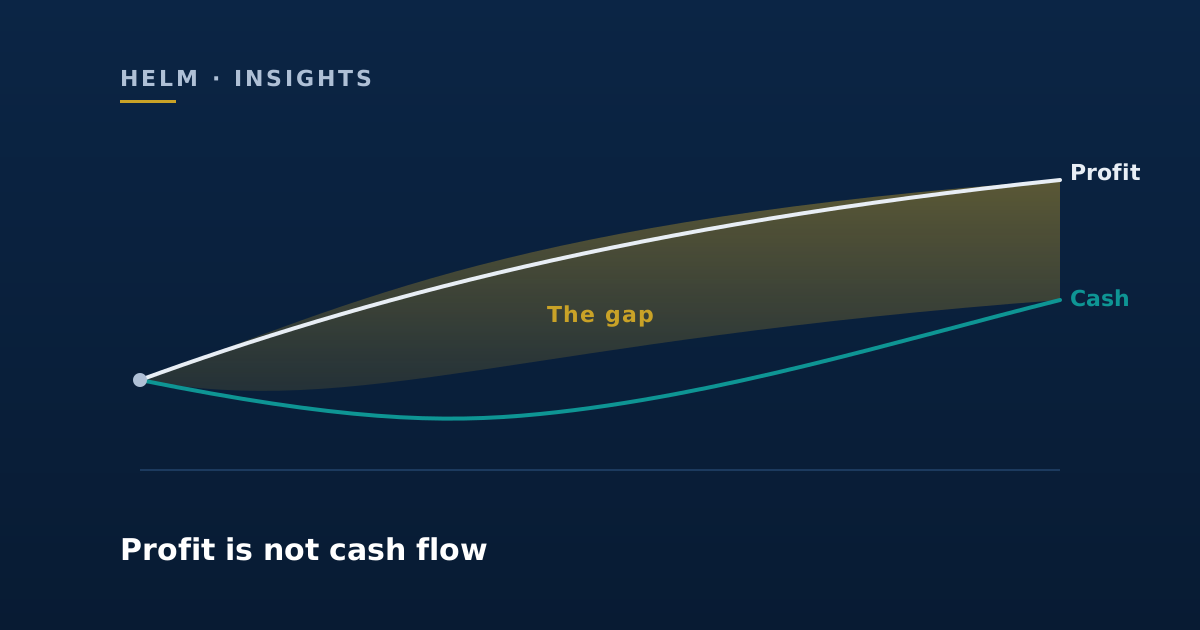
You work hard, you win the business, you invoice the client. The accounts show a profit at year end. And yet, month after month, you find yourself watching the bank balance with a knot in your stomach.
This is one of the most common and most confusing situations in a growing business. It has a name: the cash flow gap. And understanding it can change the way you run your company.
Profit is an accounting concept. Cash is what pays wages.
When an accountant calculates your profit, they match revenue to the period it was earned and expenses to the period they were incurred. The timing of actual bank transactions is largely irrelevant to the profit figure.
You sell EC$50,000 of goods in December. Payment arrives in February. Your December accounts show the revenue. Your December bank balance does not.
The profit was real. The cash was not there yet.
Where the money goes
Even when the cash does arrive, several things compete for it before you get to call it yours.
Stock and inventory. To sell more, you need to buy more. A Grenada-based import-distribution business might need to double its stock holding as it expands, locking up cash for weeks or months before it sells through.
Debtors (money owed to you). Every day a client has not paid you is a day you are effectively lending them money interest free. If your average debtor takes 45 days to pay and your supplier expects payment in 30 days, you are funding that gap yourself.
Capital purchases. That delivery truck or piece of equipment shows as depreciation in the profit and loss account, spread over several years. But you paid for it on day one.
Loan repayments. Principal repayments on borrowings reduce your bank balance but do not show up as a cost in your profit and loss.
Tax. Profit creates a tax liability. Cash pays it. In Grenada that liability includes VAT at 15%; in Trinidad and Tobago it is 12.5%. Either way, the money is collected on the state’s behalf and has to be set aside rather than treated as yours to spend.
The working capital trap
The cruelest version of this problem hits businesses that are growing fast. Every new order requires more stock, more labour up front, and more outstanding invoices. The faster you grow, the more cash your business swallows before it spits any back out.
This is why growing businesses with strong order books sometimes find themselves unable to make payroll. It is not mismanagement in the obvious sense. It is working capital consuming the cash faster than the bank balance can recover.
Seasonal trade sharpens the effect. A hospitality or tourism operator gearing up ahead of its peak season, or an import-distribution business stocking up before its busiest trading period, has to fund the wages, stock, and supplier payments well before the revenue lands. The cash goes out first and comes back later, which is exactly when the gap bites.
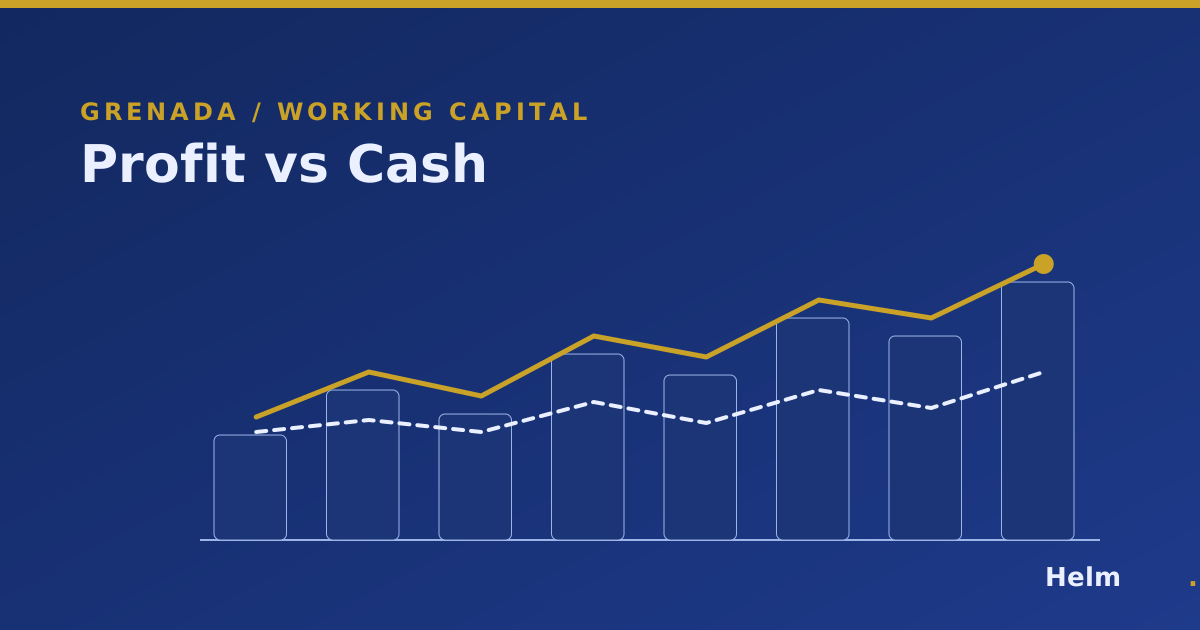 Profit is booked when earned; cash arrives later, and stock and debtors consume it first.
What to do about it
The starting point is separating the conversation about profitability from the conversation about cash. They are both important. They require different tools and different decisions.
On the cash side, three things matter most:
Know your cash position at least four weeks ahead. A simple rolling forecast, updated weekly, gives you time to act before a problem becomes a crisis. Scrambling for cash on the day it runs out is expensive and stressful.
Tighten your debtor terms. Invoice promptly, set clear payment terms, and follow up consistently. Every extra day in debtor days is a day of cash you are not holding.
Understand your stock position. If you are holding more inventory than you need, that is cash sitting on a shelf. A regular slow-mover review can free up significant working capital.
On the profit side, make sure you actually know what your margins are by product, by job, or by service line. Many businesses that feel cash poor are also quietly suffering from margin problems they cannot see because the numbers are not broken down properly.
The link between the two
Improving profit helps cash. Tighter margins mean less revenue to recover costs before you break even. But profit alone will not solve a working capital problem.
The businesses that manage cash well do three things consistently: they forecast it, they monitor debtor and creditor days as key metrics, and they treat the balance sheet as an active management tool, not just something that appears in the year-end accounts.
If you do not currently have a cash flow forecast, that is the most practical first step. It does not need to be elaborate. It needs to be honest and it needs to be maintained.
If you want to see how your profit and cash are tracking, and where the gaps are in your business, a complimentary financial health review is a good place to start. Request yours here.
Frequently asked questions
- How can a profitable business run out of cash?
- Profit matches revenue and expenses to the period they relate to, regardless of when cash actually moves. Revenue can be earned and booked before the customer pays, so the profit is real while the cash is not there yet.
- Where does the money go even when cash arrives?
- Into stock and inventory, debtors, capital purchases, loan principal repayments, and tax, several of which do not appear as costs in the profit and loss account.
- What is the most practical first step?
- A simple rolling cash flow forecast, updated weekly, that shows your cash position at least four weeks ahead.
Put this to work on your own numbers
Get a direct conversation about your numbers with a qualified Financial Controller. No obligation.
Request a complimentary review